
2026 Middle States Commission on Higher Education Reaccreditation
The Middle States Accreditation site visit team will be on campus March 9-11, 2026.
Spring 2026 Middle States Visit SPRING 2026 MIDDLE STATES VISIT
Overview
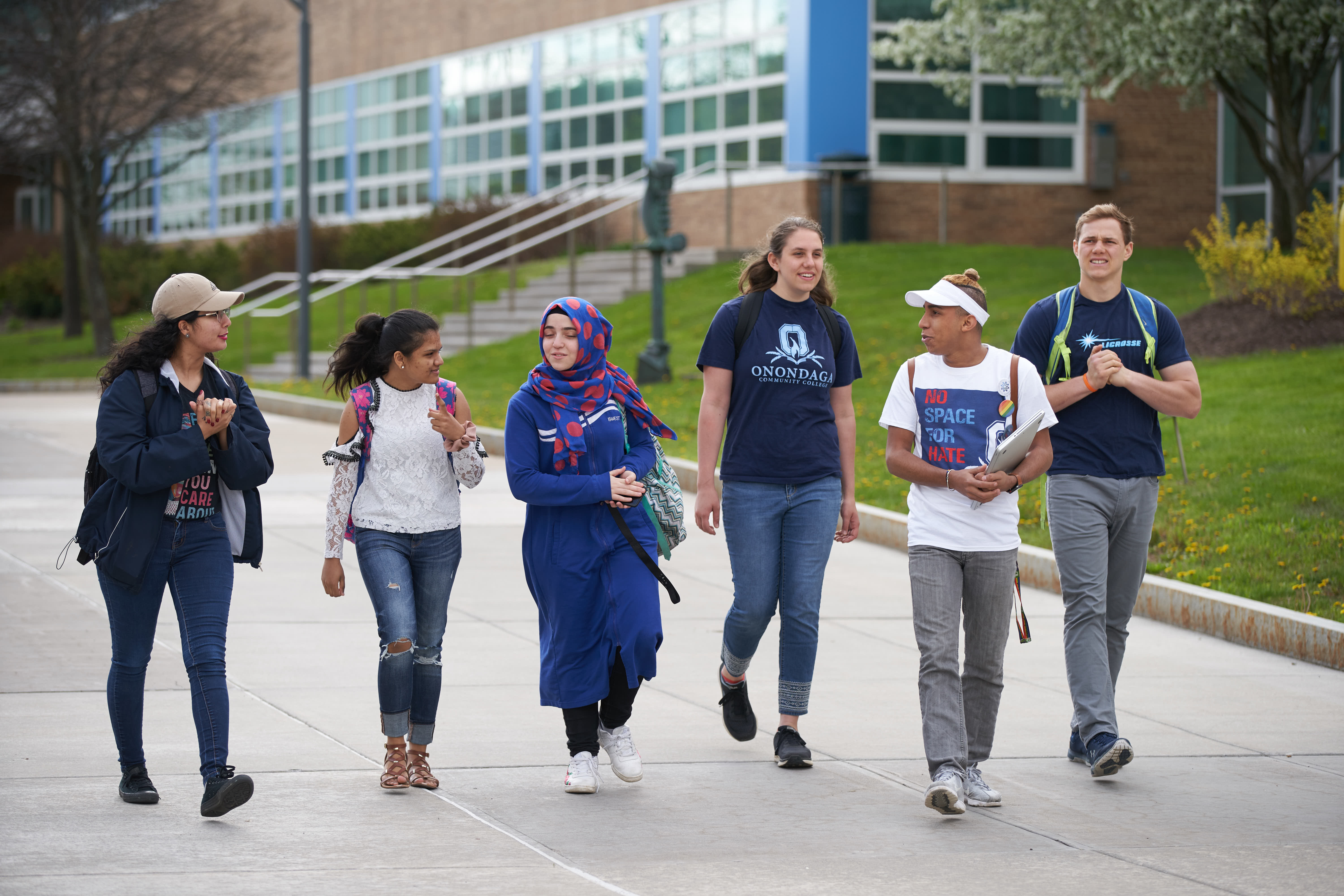
"The Middle States Commission on Higher Education (MSCHE) requires that its institutions meet rigorous and comprehensive accreditation standards, which are addressed in the context of the mission of each institution and within the culture of ethical practices and institutional integrity expected of accredited institutions. In meeting the quality standards of MSCHE accreditation, institutions earn accredited status, assuring students and the public of excellence in higher education." (msche.org, 2023)
Onondaga Community College's accreditation by the Middle States Commission on Higher Education plays a crucial role in upholding educational standards, ensuring accountability, and promoting quality education at the college.
Every OCC employee plays a vital role in the success of the reaccreditation process.
Self-Study Narrative
The Self-Study Narrative is a comprehensive story of who we are as an institution, what we value, and how we continuously strive for excellence. It’s more than a report; it’s a reflection of our shared commitment to student success, innovation, and integrity.
Since its last accreditation visit in 2018, OCC has weathered many challenges and will undoubtedly face more, but these qualities will allow it to survive and thrive in the future. OCC has adapted to its changing environment by enacting sweeping, organizational change driven through internal collaboration and a shared commitment to student success and data driven decision making.
There are two different ways to access the self-study narrative. You can read the full version as a .pdf or listen to each chapter in .mp3 format. The audio version was slightly edited to make it easier to listen to, and visual content like charts, graphs, and pictures, is not available. Read it when you have time, listen to chapters on your commute or while working out; everyone in the OCC community is encouraged to engage with the narrative in whatever ways they can.
Self-Study Narrative (Written) Self-Study Narrative (Audio)
Duck Hunt Winners
Congrats to our Top 3 Duck Hunters each week, who each won an Amazon gift card!
Self-Study Design
The Self-Study Design is a document developed by the institution to serve as a guide for the self-study process. This document enables the Steering Committee and Work Groups to conceptualize and organize tasks relevant to the self-study and serves as a blueprint for the self-study process.
OCC’s Institutional Priorities
OCC has identified four realistic, relevant, and achieveable intitutional priorites that will be addressed during the self-study:
- Strategic plan goal #1: Help students achieve their educational and career goals through responsive academic experiences, innovative teaching strategies, and exemplary learning support services.
- Strategic plan goal #2: Foster a student-centered and equitable campus experience where all students feel welcomed, valued, connected, and empowered to succeed.
- Strategic plan goal #3: Ensure communication systems are consistent, transparent, and designed to promote student success.
- Foster engagement and partnerships with school districts, governmental and community organizations, and businesses.
Approved by CLC on February 2, 2024
Timeline
Spring 2023: Creation of the Middle States Steering Committee and the initial meeting with the steering committee members.
Summer 2023: Finalize standard membership lists, create the Middle States website, and a 3-year communication plan.
Fall 2023: Formally launch the self-study with the campus community and begin regular meetings with the steering committee and work group teams to begin collecting and analyzing data based on each standard.
Spring 2024: : Work groups will begin reviewing evidence that has been collected for their standard, find new relevant evidence, continue research on their lines of inquiry, and prepare to write their narrative.
Fall 2024: Work groups will begin writing drafts of their standard while presentations will be given to shared governance groups across campus. Accreditation Academies will begin.
Spring 2025: All completed standards will be turned into the general editor for final touches. The draft self-study will be reviewed and shared campus wide.
Fall 2025: The steering committee will field requests for feedback and once completed, the President's Office will share the complete self-study report with the campus community. A Site Visit Coordinator will be selected and on-campus institutes will be created to prepare for the site visit. Self Study Prep Academies will take place.
Spring 2026: Complete the Middle States reaccreditation site visit and subsequently report out the result of the site visit with a formal report to the campus community.
Summer 2026: Create a formal plan with various groups across campus to address any issues resulting from the site visit and action plans that include short, medium, and long-term goals.
Co-Leads For Self-Study Steering Committee
- Malkiel Choseed, Professor of English, ILS, and Communications
- Erin Vaccaro, Associate Vice President of Enrollment Development
Certification of Evidence Review and Tracking (CERT) Team
- Abby Klein, Assistant Director, Registration & Curriculum
- Nicole Schlater, Associate Vice President, Grants
- Sean Vormwald, Interim Assistant Vice President, IPAR
Work Group I: Mission & Goals
- Co-Chairs: Amy Proulx, Assistant Controller & Lisa Hoff, Library Department Chair, Associate Professor
- Nicole Schlater, Associate Vice President, Grants
- Ryan Nellenback, Director, Student Onboarding
- Dana Marzynski, Typist II, Residence Life
- Maryann Page, Professor, Biology
- Lindsey Reider, Professor, Physical Education
- Dianna Lewis-Brewster, Professor, Nursing
- Matt Ruddy, Associate Professor, Biology
- Executive Council (EC) liaison to Work Group: Scott Schuhert, Dean of Students
Work Group II: Ethics & Integrity
- Co-Chairs: Michelle Malinovsky, Associate Professor, Library & Naomi Stewart, Assistant Director School of Technology, Engineering, and Computing
- Kevin Sapio, Associate Vice President, Enrollment Services
- Roger Mirabito, Executive Director of Communications
- Brian Wetherby, Director, Marketing & New Media
- Caleb White, Technical Specialist, Educational Opportunity Program
- Mike Podolny, Associate Professor, English, ILS, & Communications
- Stephanie Putman, Associate Professor, English, ILS, & Communications
- Timur Saka, Associate Professor, Library
- Doug Dinero, Professor, Social Sciences
- Erin Woods, Director, Student Accounts
- EC liaison to Work Group: Monifa Wilxox, Vice President, Human Resources
Work Group III: Design & Delivery of the Student Learning Experience
- Co-Chairs: David Furney, Dean of Health and Technology & Helaine Lubar, Associate Professor, English, ILS, & Communications
- Annie Tuttle, Professor, Social Sciences
- Amber Ingalls, Director, Concurrent Enrollment
- Abby Klein, Assistant Director, Registration & Curriculum
- Laura Abbatiello, Academic Technology Specialist
- Justin Pritchard, Dean of Instructional Services
- Lisa Smolen, Technical Specialist, Office of Dean of Students
- Kerry Evans, Professor, Social Sciences
- Tammy Lytle, Assistant Professor, Physical Therapy Assistant Program
- Benjamin Miller, Associate Professor, English, ILS, & Communications
- Jessica Wieczorek, Associate Professor, Criminal Justice & Public Safety
- Tracy Finke, Assistant Professor, Nursing
- EC liaison to Work Group: Scott Schuhert, Dean of Students
Work Group IV: Support of the Student Learning Experience
- Co-Chairs: Jenna Alexander, Assistant Dean of Student Services & Christian Heisler, Professor, English
- Flagan Prince, Director, Early College Pathways
- Kara Hook, Director, Student Central
- Erin Kelly, Director, Registration & Records
- Gino Duca, Assistant Professor, Applied Engineering Technology
- Kristen Costello, Associate Professor, Business & Hospitality
- Carolyn Bice, Associate Professor, English, ILS, & Communications
- Debora Ryan, Student Success Specialist
- EC liaison to Work Group: Sarah Gaffney, Vice President, Enrollment Management
Work Group V: Educational Effectiveness
- Co-Chairs: Mike O’Connor, Dean, Humanities, Social Sciences & Arts & Olin Stratton, Professor, Mathematics
- Sean Vormwald, Director, Data Insights & Visualization
- Ted Mathews, Student Success Specialist
- Dana Acee, Director, Career & Transfer Services
- Mike Borsz, Athletic Director
- Andrea Scheibel, Technical Specialist, Music
- Robin Weeks, Professor, Physical Education
- Pat Kenny, Professor, Social Sciences
- Barbara Wells, Professor, Biology
- Matt DelConte, Associate Professor, English, ILS, & Communications
- Rebecca Fracchia, Director, Industry Partnerships
- EC liaison to Work Group: Agatha Awuah, Vice President, Institutional Planning, Assessment, & Research
Work Group VI: Planning, Resources, and Institutional Improvement
- Co-Chairs: Sarah Gaffney, Vice President, Enrollment Management & Betsy Nicholas, Associate Professor Electrical Technology
- Add Nicole Schlater, Associate Vice President, Grants
- Hyesook Shim, Assistant Director, Institutional Planning & Research
- Steve Suarez, Assistant Director, Campus Facilities
- Marianne Niese, Assistant Dean, Health and Community Services
- Emily Gardner, Associate Professor, Biology
- Oksana Korol, Associate Professor, Biology
- Kathleen Oemcke, Assistant Professor, Nursing
- Cindy Arcuri, Professor, Nursing
- Christine Root, Software Systems Administrator
- Scott Whalen, Director of Employee & Labor Relations
- EC liaison to Work Group: Mark Manning
Work Group VII: Governance, Leadership, and Administration
- Co-Chairs: Julie Hart, Chief of Staff & Larry Weiskirch, Professor, Biology
- Shawn Edie, Director, Student Orientation, Leadership & Engagement
- Sue Tormey, Associate Vice President, Advancement Communications
- Julie Hart, Chief of Staff
- Yanina Colberg, Technical Specialist, Biology
- Bob Collins, Assistant Professor, Chemistry & Physical Sciences
- Shawn Wiemann, Professor, Social Sciences
- James Taylor, Professor, Hospitality Management
- Rob Bridge, Professor, Music
- EC liaison to Work Group: Eunice Williams
Verification of Compliance Workgroup
- Anne Deland, Director, Compliance and Auxiliary Services
- Linda Kelley, Assistant to the Chief Financial Officer/Senior Vice President
- Christian Sisack, Professor, English, ILS, & Communications
- Patrick Snow, Associate Professor, English, ILS, & Communications
Lines of inquiry are critical questions that develop or investigate a particular analytical focus in each of the seven standards.
Standard I Mission and Goals
- How are Onondaga Community College’s Mission and Goals developed in an inclusive, collaborative, and transparent process that addresses all key stakeholders?
- How are the Colleges’ Goals and Objectives clearly defined, aligned with the Mission, and speak to both internal and external stakeholders?
- How are the Mission and Goals reviewed, assessed, and updated periodically to ensure the College’s Strategic Priorities are relevant and achievable?
- How are the College’s Mission and Goals communicated broadly both internally and externally?
- How well is the College demonstrating its commitment to its Core Values? How do we measure our Core Values?
Standard II Ethics and Integrity
- How do all levels of Onondaga Community College honor and monitor its contracts (including third parties and unions) with a demonstrated avoidance of conflict of interest, and institute and follow timely formal grievance policies for fairness and impartiality? How does the College demonstrate a commitment to fairness and impartiality in these procedures across all employee classifications?
- How and in what ways does the College demonstrate truth and honesty across all audiences and groups?
- To what extent does the College demonstrate a commitment to diversity and inclusion, meeting the wide-ranging needs of its varied constituents , to ensure an authentic sense of belonging for students, faculty, employees, and other campus groups?
- What mechanisms exist to ensure Onondaga’s commitment to, and the responsible practice of, academic integrity, academic freedom, and the freedom of expression and speech?
- How does the College demonstrate a commitment to financial responsibility and transparency in its marketing and communication with students, prospective students, and their families?
Standard III Design and Delivery of the Student Learning Experience
- How does Onondaga Community College determine the rigor and coherence of its educational offerings? What evaluation methods are utilized to ensure educational excellence?
In what ways does Onondaga support the design and execution of challenging and engaging coursework to foster both personal growth and career readiness among students?
2a. How is the value of coursework made legible to students?
2b. How has Onondaga responded to the community’s needs in both career and transfer program development, such as new programs, credentials, and micro-credentials?
- How are the academic offerings and student services at Onondaga designed to support the institution’s commitment to cultivating a diverse and inclusive learning environment that supports student retention and success?
- How is Onondaga Community College identifying and creating accessible and equitable educational opportunities and resources that cater to the varied needs of its student body? In what manner does the college provide both sufficient targeted and general support systems and structures to guarantee that all students have equal chances to thrive academically?
Standard IV Support of the Student Experience
How does Onondaga demonstrate a commitment to improve student success for all learners?
What programs and strategies enhance students’ educational experiences?
What practices does the college use to admit, retain and support a diverse population of students?
How does the college provide programming and resources to support the personal wellness of students?
What communication systems and processes exist at the college and how effective are they at supporting students and fostering their success?
How does Onondaga leverage data to inform the improvement of student services?
Standard V Educational Effectiveness Assessment
1. How and in what ways are we assessing student success after Onondaga Community College (jobs, pay, graduation from transfer institution)? In what ways would qualitative assessment supplement the college’s quantitative assessment of students post-Onondaga?
How and in what ways are we assessing student success after Onondaga Community College (jobs, pay, graduation from transfer institution)? In what ways would qualitative assessment supplement the college’s quantitative assessment of students post-Onondaga?
How does the current Institutional effectiveness and administrative review meet the college’s needs?
How does Onondaga use its curriculum maps to document and assess Institutional Learning Outcomes, First Year Learning Outcomes, and Program Learning Outcomes?
How does Onondaga use its assessment processes and documentation like curriculum maps to continuously improve general education and program-level student learning?
How are course-level success rates and related assessment issues communicated to stakeholders and how do they respond to them?
Standard VI Planning, Resources, and Institutional Improvement
How well-defined and inclusive are decision-making processes? How are responsibility and accountability clearly assigned to achieve institutional and unit effectiveness?
How well-defined and inclusive are decision-making processes? How are responsibility and accountability clearly assigned to achieve institutional and unit effectiveness?
How are new initiatives determined and launched, and how are initiatives assessed for their effectiveness?
How do we assess the effectiveness of planning and resource allocation, and, subsequently, how are we utilizing assessment results in planning and resource allocation for credit and noncredit programs as well as all other projects?
How does the College effectively and sustainably steward its resources (financial, capital, and human)?
How does the institution utilize its resources to promote and foster diversity, equity, and inclusion?
Standard VII Governance, Leadership, and Administration
How does Onondaga Community College define shared governance and how does the college effectively communicate the role and work of our governance bodies to the college community?
How does Onondaga determine what public interests should be served by the governing bodies?
How does the college determine what constitutes integrity and accountability in relation to the governing body, CEO, and administration?
How does the college effectively and proactively prepare for future challenges and opportunities?
How does Onondaga Community College effectively assess Governance, Leadership, and Administration and apply results for continuous improvement?