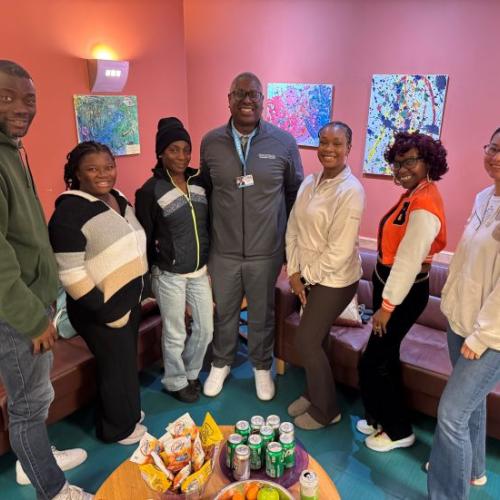
, Onondaga Community College's Director of Concurrent Enrollment, speaks with area librarians during a day-long gathering titled, "From Early Learning to College: Libraries and the Portrait of a Graduate."")
Preparing students for college-level research, digital literacy, and the responsible use of artificial intelligence doesn't begin when they arrive on a college campus. It starts years earlier. That's why Onondaga Community College brought educators and librarians together to explore how they can make that journey stronger.
On November 3, Onondaga Community College's Coulter Library hosted a day-long gathering of K-12, public, and academic librarians for From Early Learning to College: Libraries and the Portrait of a Graduate. The event served as a mini-conference, giving participants an opportunity to share ideas, learn from one another, and build connections that support students from their earliest school years through college.
The morning began with an introduction to New York State's Portrait of a Graduate, an initiative focused on the knowledge, skills, and attributes students should develop before completing their education. Participants explored how those expectations connect to the work of libraries and the transitions students make as they move from elementary school to middle school, high school, and college.
The day's collaborative sessions featured OCC faculty and librarians and focused on several issues shaping today's educational environment, including college-level research expectations, digital literacy, artificial intelligence, and opportunities to better support students taking college courses while still in high school.
One session examined how elementary and secondary educators can build foundational research skills and create greater alignment across grade levels. Another focused on preparing high school students for the expectations of freshman-level college English courses and other research-intensive assignments, including the challenges of evaluating information and using sources ethically.
Participants also explored ways libraries can support students enrolled in College Credit Now (CCN) courses and other concurrent enrollment opportunities. With nearly 4,000 high school students taking at least one OCC class, the discussion focused on the resources available to students, how school librarians can help, and how stronger partnerships can make the transition to college-level work more successful.
Other sessions gave librarians an opportunity to explore databases and digital resources, including ways to share research tools and results with students who may not have their own login credentials.
Artificial intelligence was another important topic. Discussions examined how AI is changing the research process, the challenges it presents for databases and information literacy, and the importance of helping students understand how to evaluate the information these tools provide. Participants also considered digital literacy gaps and how schools and colleges can better prepare students to navigate an increasingly technology-driven world.
For Amber Ingalls, OCC's Director of Concurrent Enrollment, the opportunity to connect with local school librarians highlighted the importance of relationships that extend beyond individual courses and institutions. “Hearing from local school librarians about their desire to support students enrolled in CCN (College Credit Now) courses, alongside our CCN instructors, reinforces the importance of strong high school partnerships,” Ingalls said. “These conversations remind me that every connection matters.”
OCC Librarian and Professor Michelle Malinovsky, who is also a SUNY AI for the Public Good Fellow, was one of the primary event organizers. She was pleased with how well the event went. "I’m feeling motivated by the partnerships and conversations that emerged. Collaborating on ways to 'Bridge the Gap' allowed me to look directly at the challenges OCC’s regional school and community librarians face and identify ways we can work together toward to support college readiness. Libraries stand as foundational pillars of academic achievement, yet they often remain an underutilized support system. This event allowed for a shared understanding of students’ preparation before they arrive on campus, while equipping community librarians with practical insights into college-level expectations so they can best support students in their home districts."