The numbers tell a clear story: the nation's need for skilled auto mechanics has reached a critical level. Between open positions and anticipated retirements, the U.S. Bureau of Labor Statistics projects an average of 70,000 job openings annually over the next decade. Adding to the challenge is the rapid pace of technological advancement in today's vehicles, which continue to grow more complex with each model year.
Onondaga Community College is helping meet this workforce demand through its Automotive Technology certificate (one year) and degree (two year) programs. Within the last five years, enrollment in those programs has more than tripled. To keep pace, OCC has expanded the number of faculty and staff with automotive technician experience. "We're offering students the perspective of our first-hand experiences, preparing them to become the automotive technicians of tomorrow," said Professor Jon Seargant, who leads OCC's Auto Tech program.
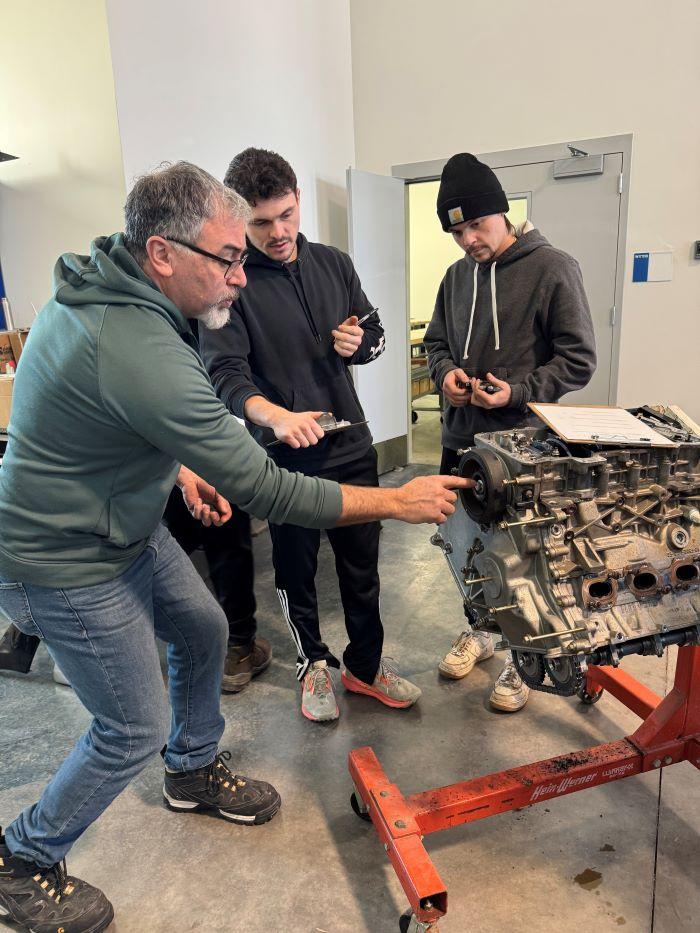
In Professor Seargant's Engine Concepts (ATC 141) class, students work in small teams as they take apart different types of engines piece by piece. "Each week, as students disassemble their engine, we talk about it in class. Students may not necessarily rebuild engines in a shop or dealership one day, but they need to know how they operate so they can diagnose them."
The disassembling and assembling of the engines takes approximately half the semester, and the exercise provides students the opportunity to learn how things work - and more. "They learn how to work together, and they learn organization - where to put parts when they remove them from the engine. Some people put parts in boxes, some people take pictures - everybody figures out their own pattern as they go through class and their career."
While many students enter OCC's Automotive Technology program having grown up working on engines, that experience isn't a necessity. Kellen Mulvihill came to OCC's Automotive Technology program after selling cars for five years. "I had more interest in turning a wrench - and learning the parts of the engine and the vehicle. When you finish working on the engine, it feels very rewarding! Sarge (Professor Seargant) says you never really stop learning. Every day, you have a new challenge or experience. You're always learning in this industry."